Once strictly confined to the dusty aisles of esoteric craft markets, hidden away in alternative boutiques, or exclusively reserved for the sprawling fields of summer music festivals, Nepalese-inspired bohemian fashion has undergone a massive cultural shift. Today, this alternative style has broken free from its niche origins to establish itself as a bold, uninhibited, and profoundly liberating form of everyday self-expression.
Bridging the gap between modular functionality, vibrantly colored patchwork, and deeply rooted ancestral craftsmanship, Nepalese boho-chic offers a refreshing dive into a wardrobe that is entirely freed from conventional fashion norms. In an era dominated by fast fashion and uniform, mass-produced clothing, the Nepalese aesthetic stands out as a beacon of individuality, comfort, and sustainable artistry.
This comprehensive guide will decode the essence of Nepalese bohemian fashion, exploring its artisanal roots in the Kathmandu Valley, defining its signature functional silhouettes, and providing you with actionable styling tips to seamlessly integrate these vibrant pieces into your everyday urban wardrobe.
The Power of Handmade: The Authentic Craftsmanship of Kathmandu
At the very core of the Nepalese bohemian aesthetic lies a relentless pursuit of raw authenticity. Far removed from the smooth, standardized, and often soulless cuts of industrial garment manufacturing, Nepalese pieces prioritize the physical manipulation of raw materials and the masterful layering of traditional artisanal techniques. Every stitch, cut, and dye tells a story of human touch and dedication.
When you purchase a piece of Nepalese-inspired clothing, you are not just buying fabric; you are wearing centuries of preserved textile traditions. Here are the three fundamental techniques that define this unique aesthetic:
The Intricate Art of Razor Cut
The « Razor Cut » technique is perhaps the most visually striking signature of Nepalese clothing. This meticulous process involves the manual slashing of the top layer of fabric to reveal underlying strata of contrasting colors, intricate patterns, or solid dyes. These hand-sliced layers create an unparalleled 3D texture that moves and breathes with the wearer. Unlike machine-made textures, the razor cut method requires a steady human hand, ensuring that the slashed motifs—whether they form abstract geometric shapes, creeping vines, or spiritual mandalas—are entirely unique to each individual garment.
Stonewashed and Batik Dyes: Vintage from Day One
Color is the lifeblood of bohemian fashion, but Nepalese clothing rarely relies on harsh, synthetic brights. Instead, artisans utilize traditional Stonewashed and Batik dyeing techniques to achieve a beautifully faded, earthy vibrancy. The stonewashing process involves physically tumbling the dyed cotton fabrics with stones, which naturally abrades the material and softens the rainbow hues. This treatment gives the garments a distinctly vintage, lived-in appearance right from the very first day you wear them. Coupled with Batik—a wax-resist dyeing technique that creates organic, crackled patterns—the resulting fabrics boast a rich visual depth that feels both ancient and effortlessly cool.
The Patchwork Assembly: Sustainable Before It Was a Trend
Long before « upcycling » and « zero waste » became mainstream fashion buzzwords, Nepalese artisans were practicing the ultimate form of sustainable fashion: patchwork assembly. The philosophy is simple yet profound—nothing is lost, everything is transformed. Leftover scraps of printed cotton, offcuts from larger garments, and swatches embroidered with intricate henna-inspired symbols or spiritual mantras are meticulously gathered and sewn back together. This patchwork technique guarantees that no two garments are ever exactly alike, making each jacket, skirt, or bag a literal one-of-a-kind masterpiece of upcycled art.
The « Pixie & Utility » Silhouette: When Mystical Style Meets Everyday Function
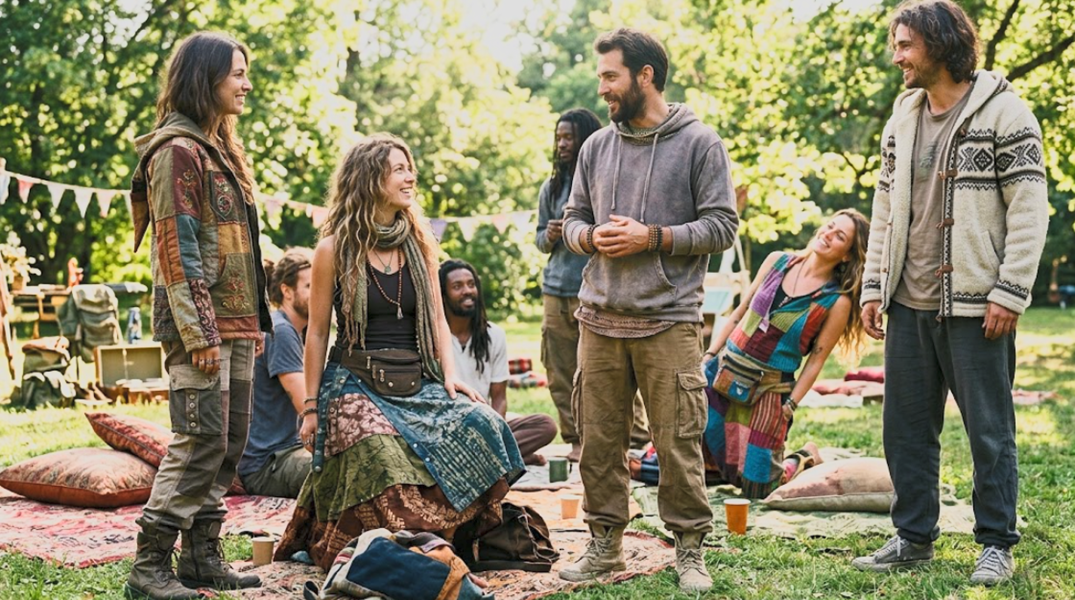
Modern Nepalese fashion is not merely about visual impact; it is fundamentally designed for movement, freedom, and practical living. The aesthetic heavily embraces what can be described as the « Pixie & Utility » silhouette—a harmonious blend of whimsical, woodland-inspired shapes and highly functional, tactical design elements.
This approach to clothing completely reimagines how a garment should interact with the body, prioritizing comfort and utility without ever sacrificing its distinct alternative edge. The key elements of this silhouette include:
The Mystique of the Pixie Hood
A defining characteristic of Nepalese outerwear is the iconic « Pixie Hood. » Moving away from standard, rounded sweatshirt hoods, these are designed with elongated, pointed cuts that drape elegantly down the back when unworn, and provide a dramatic, almost elven or mystical framing to the face when pulled up. These hoods add an immediate touch of fantasy and woodland charm to thick winter coats and lightweight summer jackets alike, perfectly capturing the free-spirited festival energy.
Wrap Systems for Ultimate Inclusivity
Nepalese fashion has long championed body positivity and size inclusivity through the ingenious use of wrap systems. Instead of rigid zippers or restrictive waistbands, you will frequently find wrap skirts (jupes portefeuille) equipped with long rows of adjustable snap buttons or flexible tie-strings. This enveloping design allows the garment to seamlessly adjust to all body types and fluctuate with the wearer’s shape over time, offering a bespoke, comfortable fit that flatters every silhouette.
Removable Pouches and Utility Wear
Perhaps the most practical aspect of the boho-Nepalese style is its heavy reliance on « utility wear. » This approach liberates the wearer from the burden of carrying heavy, cumbersome bags. In this vestiary universe, pockets are not just hidden afterthoughts; they are prominent, structural elements of the garment’s design. You will find integrated bum-bags built directly into skirts, massive cargo pockets on harem pants, and even fully removable, zippered utility pouches equipped with sturdy carabiners. These adjustable closure systems and modular accessories offer absolute freedom, making them the ultimate choice for traveling, attending festivals, or simply navigating a busy urban landscape hands-free.
How to Wear Boho-Nepalese Style Every Day (Without Looking Like a Costume)
A common hesitation when adopting festival-inspired fashion is the fear of looking like you are wearing a costume. However, successfully integrating these bold, expressive pieces into a modern urban wardrobe is entirely possible. The secret lies in the art of balance and the contrast of textures.
By pairing highly detailed, artisanal Nepalese items with clean, minimalist modern basics, you can create outfits that are stylish, grounded, and incredibly chic. Here is how you can style key Nepalese pieces for daily wear:
Styling the Patchwork Hooded Jacket
A heavily textured, multi-colored patchwork jacket with a pixie hood is undeniably a statement piece. To allow the craftsmanship to shine without overwhelming your look, pair it with highly understated basics. A simple heather-gray or crisp white t-shirt layered underneath, combined with a pair of straight-leg raw denim jeans, creates the perfect equilibrium. The clean lines of the denim and the neutrality of the t-shirt ground the outfit, striking a flawless balance between artisanal eccentricity and standard urban casual wear.
Elevating the Adjustable Batik Mini-Skirt
Nepalese wrap skirts, especially those featuring vibrant stonewashed batik prints and built-in utility pockets, carry a lot of visual weight around the waist and hips. To balance this, pair the skirt with a sleek, form-fitting black turtleneck or a fitted ribbed tank top. Tucking in the top will beautifully highlight the intricate snap-button belt work of the skirt. Finish the look with a pair of sturdy leather combat boots or strappy leather sandals, depending on the season. This combination highlights the vibrant colors of the fabric while maintaining an edgy, modern silhouette.
Mastering the Fleece-Lined Wool Vest
For colder months, the Nepalese thick wool vest—often hand-knitted and lined with incredibly warm fleece—is a winter staple. While it is easy to pair this with baggy boho trousers, for a more versatile everyday look, try contrasting it with a pair of tailored, neutral-toned chino pants (such as olive green, khaki, or navy). Add a long-sleeved thermal shirt underneath and finish the ensemble with a pair of retro-style sneakers. The result is a warm, relaxed « adventurer » spirit that feels incredibly cozy yet perfectly appropriate for a weekend brunch or a casual day at the office.
Why Nepalese Fashion is More Than Just a Trend
In today’s hyper-accelerated fashion cycle, where trends appear and disappear in a matter of weeks, Nepalese bohemian clothing offers a refreshing counter-narrative. It aligns perfectly with the growing global demand for « slow fashion. »
Purchasing these garments often means supporting small, family-run workshops in the Kathmandu Valley and surrounding regions. It represents a conscious choice to value human labor, traditional skills, and sustainable practices over mass manufacturing. Furthermore, the robust materials used—heavy-duty cottons, thick sheep’s wool, and durable hemp—ensure that these garments are built to last, weathering beautifully over time and becoming more comfortable with every wash.
Conclusion: The Elegance of Imperfection
Ultimately, embracing Nepalese bohemian fashion is about celebrating the elegance of imperfection. It is an aesthetic that finds profound beauty in the slight variations of dye lots, the asymmetrical alignment of a patchwork square, and the visible hand-stitching of a razor-cut motif.
In a contemporary clothing landscape that is all too often homogenized and sterile, these Nepalese garments do something incredibly rare: they tell a story. They carry the spirit of authentic craftsmanship straight from the majestic valleys of Kathmandu, beautifully reinvented to serve a modern wardrobe that is unapologetically free, deeply functional, and eternally nomadic. By integrating these pieces into your daily life, you are not just wearing a trend; you are boldly asserting your individuality and keeping a vibrant, ancestral art form alive.