
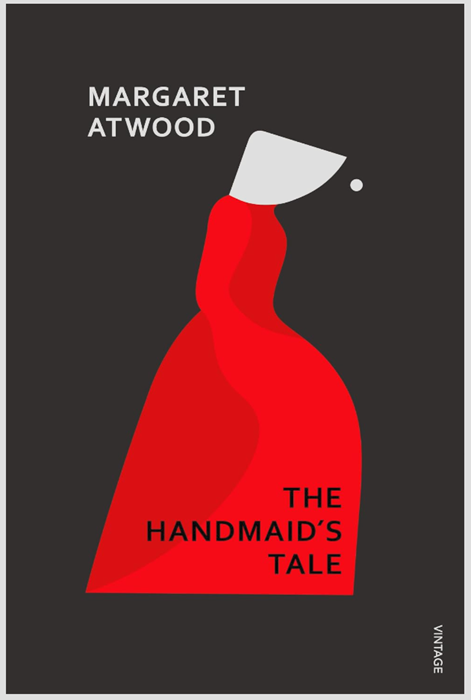
Description
Few novels in the modern literary canon have permeated the cultural consciousness quite like Margaret Atwood’s seminal work, The Handmaid’s Tale. Originally published in 1985, this gripping dystopian novel has only grown in its chilling relevance, serving as both a masterclass in speculative fiction and a profound cautionary tale. Set in a totalitarian, theocratic regime that has overthrown the United States government, the story offers a harrowing look at the extremes of patriarchal control, the fragility of human rights, and the indomitable nature of the human spirit. For readers exploring feminist literature or dystopian fiction, Atwood’s novel remains an essential, unforgettable journey into a world where freedom is a forgotten luxury.
The Chilling Premise of The Republic of Gilead
To understand the sheer terror of The Handmaid’s Tale, one must first understand the world in which it takes place. The story is set in The Republic of Gilead, a fiercely oppressive state born out of environmental disaster, plummeting birth rates, and a violent ideological coup. In this bleak new reality, society is strictly stratified, and women are entirely stripped of their autonomy, their finances, their careers, and even their ability to read.
Gilead operates on an extremist interpretation of biblical precedent, where citizens are rigidly categorized by their utilitarian value to the state. Wives wear blue, Marthas (domestic servants) wear green, Aunts (enforcers of female compliance) wear brown, and the Handmaids—the tragic focal point of the novel—are draped in striking, inescapable red. It is a terrifying landscape of persecution, where secret police known as the Eyes watch every move, and any deviation from the state’s rigid laws results in execution or exile to the toxic radioactive wastelands known as the Colonies.
Who is Offred? A Portrait of Erased Identity
At the very heart of this devastating narrative is our protagonist and narrator, Offred. She is a Handmaid in The Republic of Gilead, forcibly assigned to the household of a high-ranking official known as The Commander, Fred Waterford. In Gilead, a Handmaid’s previous identity is completely obliterated. Even her name is not her own; « Offred » literally translates to « of Fred, » a patronymic title denoting her status as the Commander’s property.
Through Offred’s intimate, observant, and deeply internal first-person narration, readers are plunged into the psychological horror of losing oneself. Atwood masterfully crafts a protagonist who is not a traditional action hero, but rather an ordinary woman forced into an extraordinary and horrifying situation. Her quiet observations and internal monologues reveal a sharp intellect and a desperate will to survive a regime designed to break her down. Offred is the everywoman, making her plight all the more resonant and terrifying for the reader.
The Brutal Reality of a Handmaid’s Function
In this devastated world, Offred has only one recognized function: to breed. The plunging fertility rates of the pre-Gilead world have transformed viable, fertile women into highly controlled state commodities. Offred is subjected to institutionalized sexual servitude, participating in a monthly, dehumanizing ritual known as the Ceremony, which is meant to result in the repopulation of the ruling class.
The stakes for a Handmaid are brutally absolute. If Offred refuses to enter into this sexual servitude to repopulate the ravaged world, or if she fails to produce a viable child after three postings, her fate is sealed. She will be declared an « Unwoman » and either exiled to an agonizing death in the Colonies or publicly hanged at the Wall. The Wall serves as a constant, gruesome reminder of the regime’s absolute power, decorated with the bodies of dissidents, doctors, and rebels. This ever-present threat of torture and execution forces Offred to walk a razor-thin line of compliance, masking her true thoughts behind a veil of pious obedience.
Flashbacks and the Echoes of a Pre-Revolution Life
One of the most compelling narrative techniques Atwood employs in The Handmaid’s Tale is the seamless interweaving of Offred’s present-day trauma with flashbacks to her pre-revolution life. Before Gilead, Offred was an independent woman with a job, a husband named Luke, a young daughter, and a vibrant best friend named Moira.
These flashbacks serve a dual purpose. First, they provide a chilling blueprint of how a democratic society can collapse into a totalitarian nightmare. Atwood meticulously details the gradual, almost imperceptible stripping away of women’s rights—starting with the freezing of bank accounts and the termination of female employment—demonstrating how easily the unthinkable can become reality.
Secondly, these memories are Offred’s lifeline. In a world that attempts to erase her mind, her ability to remember her past is an act of quiet, radical defiance. The memories of her husband’s embrace, her daughter’s laughter, and the simple freedoms of buying a coffee or wearing what she pleased anchor her to her humanity, preventing her from becoming the mindless vessel Gilead wants her to be.
Navigating Danger: The Men Who Hold Offred’s Fate
As Offred navigates this terrifying landscape in the present day, her survival becomes intricately tethered to the whims of two very different men. Her future hangs precariously between them, forcing her to play a dangerous psychological game.
On one side is The Commander, Fred Waterford. As an architect of Gilead’s oppressive system, he holds ultimate authority over Offred’s life. Yet, he inexplicably seeks illicit intimacy with her outside of the sanctioned Ceremony. He invites her to his private study for forbidden games of Scrabble, gives her smuggled magazines, and craves a twisted sense of connection. Offred must carefully manipulate this bizarre, hypocritical dynamic, extracting small favors and information while knowing that one wrong move could lead to her execution.
On the other side is Nick, the Commander’s stoic and mysterious driver. Nick represents a different kind of danger—and a different kind of salvation. He is a man of lower status, yet he commands an undeniable, visceral pull on Offred. As the state fails to yield a child through the Commander, Offred is pushed into a covert, highly illegal arrangement with Nick. Their secret encounters blur the lines between survival strategy and genuine passion. Through Nick, Offred risks everything, torn between the pragmatic need to secure her safety by getting pregnant and the sudden, dangerous reawakening of her own suppressed desires.
Themes of Hope, Desire, and Rebellion
The genius of Atwood’s novel lies in its profound understanding of human nature: even a repressive, omnipotent state cannot completely eradicate hope and desire. Gilead attempts to sterilize human emotion, replacing love with duty and passion with rigid scriptural obedience. Yet, desire finds a way to crack through the totalitarian concrete.
Offred’s affair with Nick, her secret communications with the underground resistance movement known as Mayday, and her refusal to forget her daughter all serve as testaments to the unyielding human spirit. Rebellion in The Handmaid’s Tale is not always loud or explosive; more often, it is found in stolen glances, whispered words in the dark, and the simple, stubborn insistence on feeling something in a world that demands numbness. Offred’s inner life is a fortress that Gilead cannot breach, proving that true subjugation is impossible as long as the mind remains free.
Why The Handmaid’s Tale Remains a Crucial Read Today
More than three decades after its initial publication, The Handmaid’s Tale has achieved a mythical status in contemporary culture, largely aided by its critically acclaimed television adaptation. But the novel itself remains an unparalleled literary achievement. Margaret Atwood famously stated that she included nothing in the book that had not already occurred somewhere in human history. This foundational rule grounds the dystopia in a terrifying reality, making it a powerful commentary on religious extremism, political complacency, and the enduring fight for women’s reproductive rights.
For readers seeking a book that challenges, terrifies, and ultimately illuminates the value of freedom, this novel is unparalleled. It demands that we remain vigilant, questioning the structures of power and fiercely protecting the liberties we often take for granted.
Ultimately, The Handmaid’s Tale is not just a story about a woman named Offred living under the heel of Commander Waterford. It is an exploration of survival against all odds, a tribute to the power of memory, and a stark warning about the fragility of human rights. As Offred navigates her treacherous path through the Republic of Gilead, readers are left breathless, clinging to the same fragile threads of hope and desire that keep her alive. It is a masterpiece of dystopian fiction that will continue to echo through generations, urging us to never let the darkness of Gilead become our reality.