From Tokyo to New York, by way of London and Los Angeles, two words are often enough to evoke a world of absolute sophistication, creativity, and elegance: French Touch. While this expression first made club walls tremble worldwide in the 90s with the explosion of the French electronic music scene, it has since largely outgrown its original framework.
Today, the French Touch has become the universal symbol of a highly coveted lifestyle, a trademark applied to fashion, cinema, gastronomy, video games, and design. But what really hides behind this concept? Why does this « je ne sais quoi » fascinate the entire planet so much? Dive into the heart of the French art de vivre, where tradition tirelessly flirts with the avant-garde.
The General Concept: That Famous « Je Ne Sais Quoi »
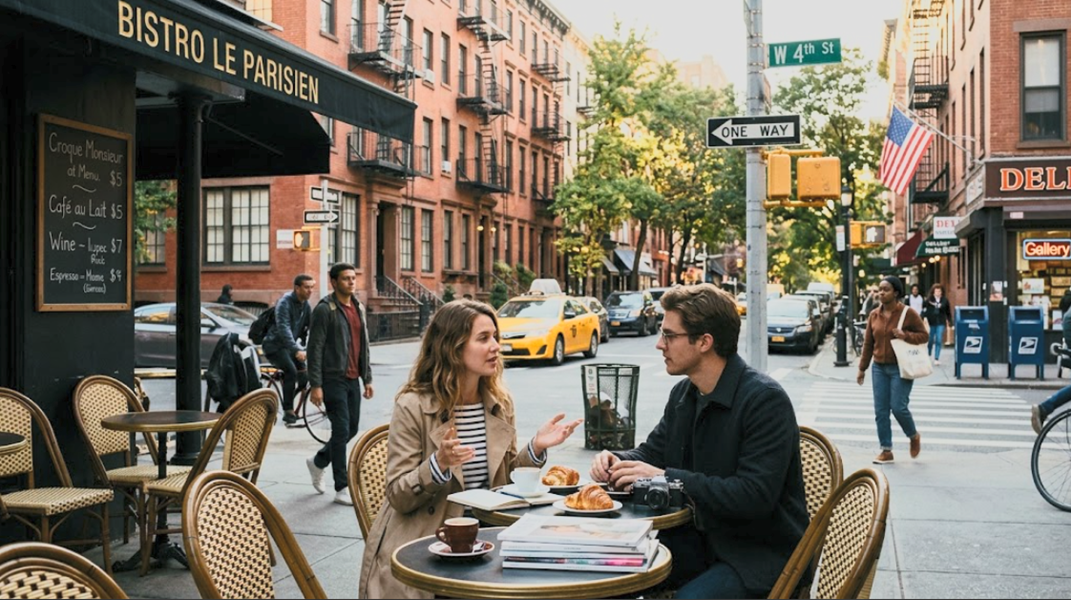
The French Touch is above all an attitude. It is the art of cultivating effortless chic, that highly French (and particularly Parisian) ability to look incredibly sophisticated without ever seeming to have made the slightest effort. It is a clever alchemy between assumed arrogance and elegant nonchalance.
In the lifestyle realm, the concept relies on the pursuit of excellence paired with a form of rebellion. French creators do not merely follow the rules; they master them perfectly only to better break free from them. The French Touch is the rejection of the standardized. It is about favoring craftsmanship, taking a step aside, a signature authorial voice, and authenticity over mass production. It is a life philosophy that values time: the time to stroll on a terrace, the time to savor a meal, the time to design a timeless masterpiece.
Fashion: Natural Elegance and Haute Couture Heritage
If there is one area where the French Touch reigns supreme, it is undoubtedly fashion. The cradle of Haute Couture, France has imposed its vision of clothing on the whole world. From the revolutionary heritage of Coco Chanel, who liberated women’s bodies, to the subversive genius of Yves Saint Laurent, French fashion has always been a subtle blend of technical rigor and transgression.
Today, French Touch fashion unfolds in two major currents that fascinate the international scene. On one side, patrimonial luxury carried by historical giants (Dior, Louis Vuitton, Hermès) who perpetuate unparalleled savoir-faire in leather goods, jewelry, and couture. On the other, the new guard redefining the everyday wardrobe. Designers like Simon Porte Jacquemus, with his sunny and Mediterranean aesthetic, or Direct-to-Consumer brands like Sézane and Rouje, have successfully captured the essence of the « French girl. » The whole world tries to copy this signature look: a perfectly cut pair of jeans, a slightly unbuttoned men’s shirt, a fluid trench coat, a red lip, and expertly tousled hair. French fashion does not disguise; it sublimates personality.
Gastronomy: The Taste for Excellence and Conviviality
Inscribed on UNESCO’s intangible cultural heritage list, the French gastronomic meal is much more than just a matter of food. It is a social ritual, a true celebration of sharing. The culinary French Touch is exported not only through its luxury products (vintage champagnes, Burgundy wines, aged cheeses), but also through its approach to the dining table.
The legacy of Auguste Escoffier and Paul Bocuse laid the foundations of great classical cuisine. However, today’s French Touch shines through its bistronomy. This trend, born in Paris, consists of offering top-tier cuisine worthy of the greatest Michelin-starred chefs, but served in relaxed settings, stripping away the stiff codes of luxury hotels. It is gastronomy stripped of its arrogance yet intact in its quality. Great French chefs shine internationally, exporting this vision of a cuisine that deeply respects the product, the terroir, and the seasons, while infusing it with wild creativity.
Cinema: The Aesthetics and Emotion of the Seventh Art
France invented cinema with the Lumière brothers, and it has never stopped defending the idea that cinema is first and foremost an art (the Seventh), before being an industry. The cinematic French Touch is deeply rooted in the legacy of the Nouvelle Vague (New Wave). In the 60s, directors like François Truffaut and Jean-Luc Godard shattered storytelling codes, taking cameras into the streets and capturing life with raw spontaneity.
This influence endures. French cinema is globally appreciated for its psychological dimension, sharply crafted dialogue, and polished aesthetics. Whether it is popular comedies with universal appeal (like Amélie or The Intouchables) or intimate dramas awarded at international festivals (Cannes, Oscars), French film offers an alternative to the Hollywood blockbuster. It proposes a different rhythm, often slower, more contemplative, centered on the complexity of human relationships and a certain poetry of everyday life.
Video Games: Digital Avant-Garde and the Playful « French Touch »
It would be impossible to talk about cultural influence without addressing video games, the world’s leading cultural market. The « French Touch » of video games is a reality recognized by the entire international gaming industry. Where other countries focus primarily on pure technology or mass profitability, French studios stand out with breathtaking art direction and extraordinary narrative depth.
Giants like Ubisoft have managed to create historical franchises with global success (Assassin’s Creed, Rayman), blending meticulous historical reconstruction with addictive gameplay. But the video game French Touch is also the work of visionary studios like Arkane Studios (renowned for the sumptuous and intelligent design of games like Dishonored or Deathloop), Quantic Dream (which pioneered the interactive movie with Heavy Rain and Detroit: Become Human), or Dontnod (Life is Strange). In this digital universe, the French touch translates into a visual style often akin to comic books or animated films, and a creative courage that does not hesitate to tackle philosophical or societal themes.
Art, Design, and Architecture: Sensual Innovation
French design enjoys a spectacular aura. It is characterized by an ability to combine history (the weight of classic furniture, Haussmannian architecture) with radical modernity. The most iconic example remains Philippe Starck, who revolutionized industrial design by bringing humor, democratization, and organic lines to it, becoming the flag-bearer of French design worldwide.
The French Touch in design and architecture is the art of balance. In interior design, it is knowing how to marry a chevron parquet floor and 19th-century moldings with ultra-contemporary furniture and raw art pieces. Jean Nouvel or Christian de Portzamparc in architecture impose audacious visions across the globe, creating buildings that dialogue with their environment while asserting a strong identity. It is an intellectual aesthetic, often minimalist, but which never denies the comfort and sensuality of materials.
Music: Where It All Began
Even from a lifestyle perspective, it is crucial to pay homage to the source of the term. In the 1990s, artists like Daft Punk, Air, Cassius, and later Justice and Phoenix, took the international scene by storm. They imposed a hybrid sound, mixing Chicago house music with samples of European disco and a very strong visual aesthetic (robot helmets, music videos directed by cinema heavyweights). This French electronic music proved to the world that France could not only be the guardian of classic good taste but also the spearhead of absolute modernity and global pop culture.
Why is the French Touch so Appreciated Worldwide?
If the entire planet, from Asian markets fond of French luxury to North America fascinated by the Parisian myth, so highly acclaims the French Touch, it is because it answers a deep need of the contemporary era.
- An antidote to « Hustle Culture »: In a world dominated by excessive productivity, stress, and the optimization of every second, the French art of living offers a reassuring alternative. It whispers into the ear of the whole world that it is good to take your time, to sit at a café terrace for two hours to set the world to rights, or to read a book in a park. It is a hedonistic philosophy.
- The prestige of history and craftsmanship: To consume a product stamped with the « French Touch, » whether it is a perfume, a piece of clothing, or a video game, is to buy a piece of history. It is the guarantee of craftsmanship, of an attention to detail passed down from generation to generation.
- The fantasy of romance: Thanks to cinema, literature, and recently successful series like Emily in Paris, France (and Paris in particular) remains the ultimate backdrop for romance. The French Touch is intrinsically linked to a poetic and idealized vision of existence.
- Accessible elitism: The French Touch has managed to modernize itself. It is no longer reserved only for the ultra-rich capable of affording Haute Couture. It infuses into everyday objects, pop culture, and cosmetics (the global obsession with French pharmacy beauty is proof of this). It offers accessible cultural prestige.
The French Touch is much more than a mere tool of economic soft power for France. It is a living, moving, and incredibly resilient cultural brand. By refusing to choose between the preservation of a centuries-old heritage and the urgency of innovation, France has managed to create a universal lifestyle. To adopt the French Touch is not just to consume French goods; it is to embrace a certain idea of life, where beauty, pleasure, critical thinking, and elegance remain the true compasses of the everyday. It is a quest for aesthetic meaning that, undeniably, has not finished making the world dream.