
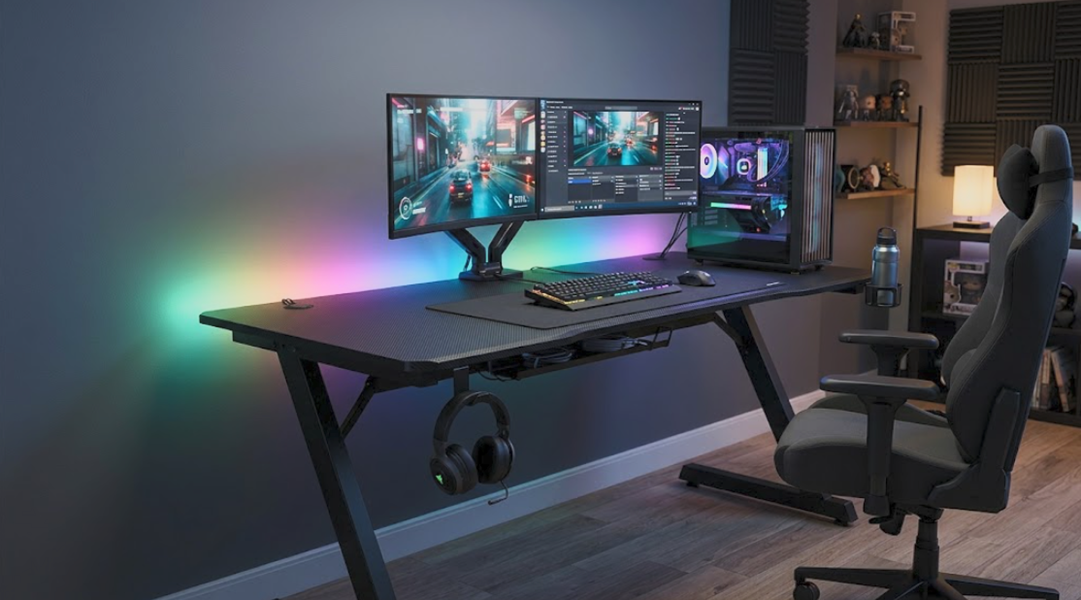
Long relegated to the status of a simple, purely functional piece of furniture, the gaming desk has metamorphosed in just a few short years. Today, it stands proudly as the undeniable centerpiece of any modern e-sports setup or home gaming room. Bridging the gap between strict ergonomic requirements, flawless cable management, and seamless technological integration, the gaming desk is no longer just a place to put a monitor—it is the command center of your digital life.
In this comprehensive guide, we will decode how this category of furniture became an absolute must-have for gamers, streamers, and tech enthusiasts alike. Whether you are building your first battle station or upgrading a professional streaming room, understanding the evolution and anatomy of the modern gaming desk is essential.
From Basic Furniture to High-Stability Engineering
The era of generic, wobbly computer tables and repurposed dining desks is officially over. The meteoric rise of multi-monitor setups and the significantly increasing weight of modern gaming hardware—including ultra-wide curved displays, heavy articulated monitor arms, massive custom liquid-cooled PC cases, and broadcast-quality audio gear—have forced manufacturers to completely rethink desk engineering.
The most significant transformation has occurred at the foundation: the legs and the frame.
The Superior Geometry of Z and T-Shape Designs
To combat the limitations of traditional furniture, specialized gaming brands have largely abandoned the standard four-leg architecture. While a standard four-leg desk places a leg at each peripheral corner, this design inherently restricts under-desk legroom and becomes highly unstable or prone to wobbling when subjected to heavy, off-center loads.
Instead, the industry has shifted toward highly engineered mechanical structures, most notably the « Double Z » or « T-shape » chassis. This structural evolution offers two massive advantages for the dedicated gamer:
- Optimal Force Distribution: The triangulated steel chassis of a Z-shape or T-shape desk actively absorbs and distributes the physical stress and weight of heavy equipment. This design completely eliminates the frustrating screen wobble that often occurs during intense, high-action gaming sessions or rapid mouse movements.
- Maximum Freedom of Movement: By removing the front corner legs, these designs provide total clearance under the desk. Gamers can freely swivel in their ergonomic chairs, stretch their legs, and position their footrests or racing pedals without banging their knees against wooden posts.
Built to endure, these heavy-duty carbon steel frames are frequently rated to support loads upwards of 100 kg (220 lbs). Furthermore, they come equipped with millimeter-precise leveling feet, ensuring a perfectly flat and stable playing surface regardless of the flooring underneath.
The Material Revolution: The Reign of Carbon Fiber and Beyond
When it comes to the modern gaming desk, the choice of the work surface is no longer dictated merely by interior design trends or basic aesthetic criteria. Today, desktop materials must respond to the rigorous daily demands of competitive gaming, continuous peripheral movement, and the inevitable spills that happen during marathon sessions.
The industry has moved far beyond cheap particleboard, embracing advanced materials that enhance both performance and style.
Carbon Fiber Textured Coating
The undisputed king of the modern gaming desk surface is the carbon fiber finish. This isn’t just about achieving that sleek, high-tech, race-car aesthetic. Functionally, this waterproof polymer treatment—often applied over a solid, eco-friendly FSC-certified wood core—provides incredible durability. It offers superior resistance to daily wear and tear, including deep scratches from metal keyboard chassis and water damage from condensation rings left by cold energy drinks. Furthermore, its micro-textured surface is incredibly easy to clean, requiring only a quick wipe down to maintain its pristine, futuristic look.
The Integrated XXL Full-Desk Mouse Pad
For competitive FPS (First-Person Shooter) players, surface area is everything. Many premium gaming desks now bypass traditional surfaces entirely, opting instead to cover the entire desktop in a custom-fitted, high-density textile mouse pad. This edge-to-edge coverage guarantees absolute optical sensor precision for your mouse, no matter how wide your arm sweeps are. It eliminates the annoying edge-drop of standard mouse pads, provides a comfortable, soft resting place for your forearms, and dampens the acoustic clatter of mechanical keyboards. Best of all, these covers are usually removable and machine washable.
Backlit Tempered Glass
For those seeking the pinnacle of modern, minimalist elegance, tempered glass desktops have entered the arena. Boasting a dark, smoky surface with striking transparency effects, tempered glass is the ultimate canvas for RGB lighting. When paired with under-desk LEDs, the glass diffuses the light beautifully, creating a floating, neon-drenched aesthetic that looks incredible on camera for streamers. While it requires more frequent wiping to avoid fingerprints, the visual impact is undeniably premium.
« Utility » Ergonomics: Everything at Your Fingertips
A premium, modern setup aims for one primary visual goal: technical neutrality. The desk must expertly conceal all the messy technical constraints—the wires, the power bricks, the clutter—leaving only the essential, beautiful hardware on display. This is where « Utility » ergonomics come into play.
Masterful Cable Management Systems
Cable clutter is the ultimate enemy of a clean gaming setup. Modern gaming desks tackle this issue head-on with built-in cable management ecosystems. This includes dual integrated routing grommets to drop cables below the surface instantly, hidden under-desk metal trays to house heavy power strips and excess wire lengths, and even specialized cutouts designed specifically to accommodate the clamps of heavy-duty articulated monitor arms. The result is a floating, wireless illusion that keeps your space organized and your mind focused on the game.
Off-Desktop Accessory Integration
Every square inch of desktop real estate is valuable. To maximize your usable space, gaming desks now feature clever, off-plateau accessory integration. Sturdy, suspended cup holders swing out from the sides to keep your beverages secure and entirely away from your expensive electronics—preventing catastrophic liquid spills over your mechanical keyboard. Similarly, dedicated under-desk headset hooks keep your expensive audio gear safe, untangled, and within arm’s reach without cluttering your mouse space.
Dynamic RGB Lighting Ecosystems
Lighting is no longer an afterthought; it is a core component of the gaming room atmosphere. While early desks simply slapped on a few LEDs, modern iterations feature dynamic RGB lighting smoothly integrated directly into the edges of the desktop or the mechanical legs. Often controllable via a universal PIN, remote control, or even synchronized with your PC’s motherboard software, these LED strips transform the desk into a living extension of your game’s visual ambience. Whether you want a pulsing neon pink for a cyberpunk vibe or a calm, breathing blue for late-night focus, the desk sets the mood.
The Ergonomic Evolution: The Rise of the Sit-Stand Gaming Desk
While discussing modern gaming furniture, it is impossible to ignore the massive shift toward health-conscious gaming. As players spend increasingly longer hours at their battlestations, the physical toll of prolonged sitting has become a central concern. Enter the motorized sit-stand gaming desk.
Blending all the gamer-specific features mentioned above (carbon fiber, RGB, cable management) with dual-motor lifting columns, these desks allow players to seamlessly transition between sitting and standing with the push of a button. Standing while gaming or working not only improves posture and spinal health, but many gamers report that standing during intense, high-stakes matches (like a final circle in a Battle Royale) actually increases their alertness, reaction times, and blood flow. With digital memory presets, players can save their exact optimal heights for sitting, standing, and even « lean-back » controller gaming.
Conclusion: Toward Personalized, Harmonious Play Spaces
Today, gaming hardware is undergoing a massive design maturation. The industry is rapidly moving away from the aggressive, overly angular « spaceship » aesthetics of the early 2010s. Instead, manufacturers are creating pieces that integrate harmoniously into contemporary interior design.
Whether you are aiming for a dark, neon-soaked, highly competitive e-sports aesthetic, or a more subdued, warm, and minimalist space accented with natural wood and ambient light, the gaming desk has proven itself to be much more than a table. It has established itself as a fully-fledged piece of technical equipment—meticulously engineered to endure, designed to protect your posture, and crafted to evolve alongside your ever-changing digital lifestyle. Investing in a high-quality gaming desk is no longer a luxury; it is the fundamental first step in building a setup where performance perfectly meets style.